Hinduism in Cambodia: A Deep Historical and Cultural Connection
Hinduism has played a profound role in shaping the history, culture, architecture, and traditions of Cambodia. Long before Buddhism became the dominant religion, Hinduism was the spiritual and political foundation of ancient Cambodian civilisation. The influence of Hinduism can still be seen today in Cambodia’s temples, art, language, rituals, and national identity. From the majestic temples of Angkor to the myths carved in stone, Hinduism remains an essential part of Cambodia’s heritage and historical legacy.
The Arrival of Hinduism in Cambodia
Hinduism arrived in Cambodia around the first century CE through Indian traders, scholars, and priests who traveled across maritime trade routes connecting India with Southeast Asia. These interactions were not based on conquest but on cultural exchange, commerce, and diplomacy. Indian merchants brought religious texts, rituals, and ideas that were gradually adopted by local rulers and communities.
Hindu Dham in Cambodia
The early Cambodian kingdom of Funan, which existed between the first and sixth centuries, was among the first to embrace Hindu beliefs. Sanskrit became the language of administration and religion, and Indian customs influenced governance, law, and social organization. Hinduism was not imposed but blended naturally with local traditions, creating a unique Cambodian version of the religion.
Hinduism During the Khmer Empire
Hinduism reached its peak in Cambodia during the Khmer Empire, which ruled much of Southeast Asia from the ninth to the fifteenth century. The Khmer kings considered themselves divine rulers, often associating themselves with Hindu gods such as Shiva and Vishnu. This belief system, known as the Devaraja or “God-King” concept, established the king as both a political and spiritual leader.
During this period, massive temples were constructed to honour Hindu deities. These temples were not only places of worship but also centres of administration, education, and culture. The Khmer Empire became one of the most powerful civilisations in Asia, and Hinduism was at the heart of its identity and governance.
Angkor Wat: The Greatest Hindu Temple in the World
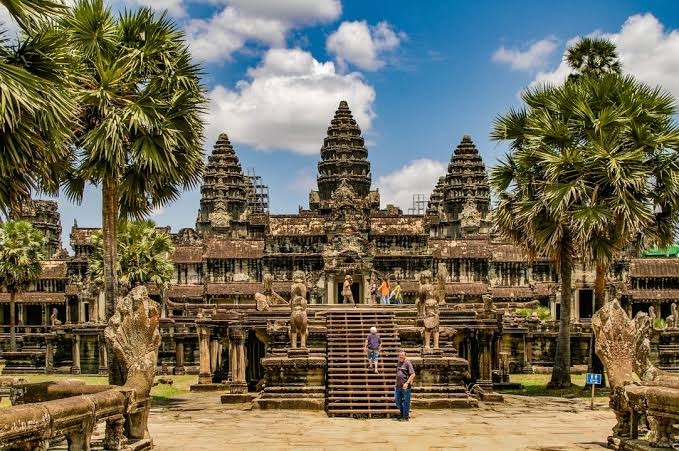
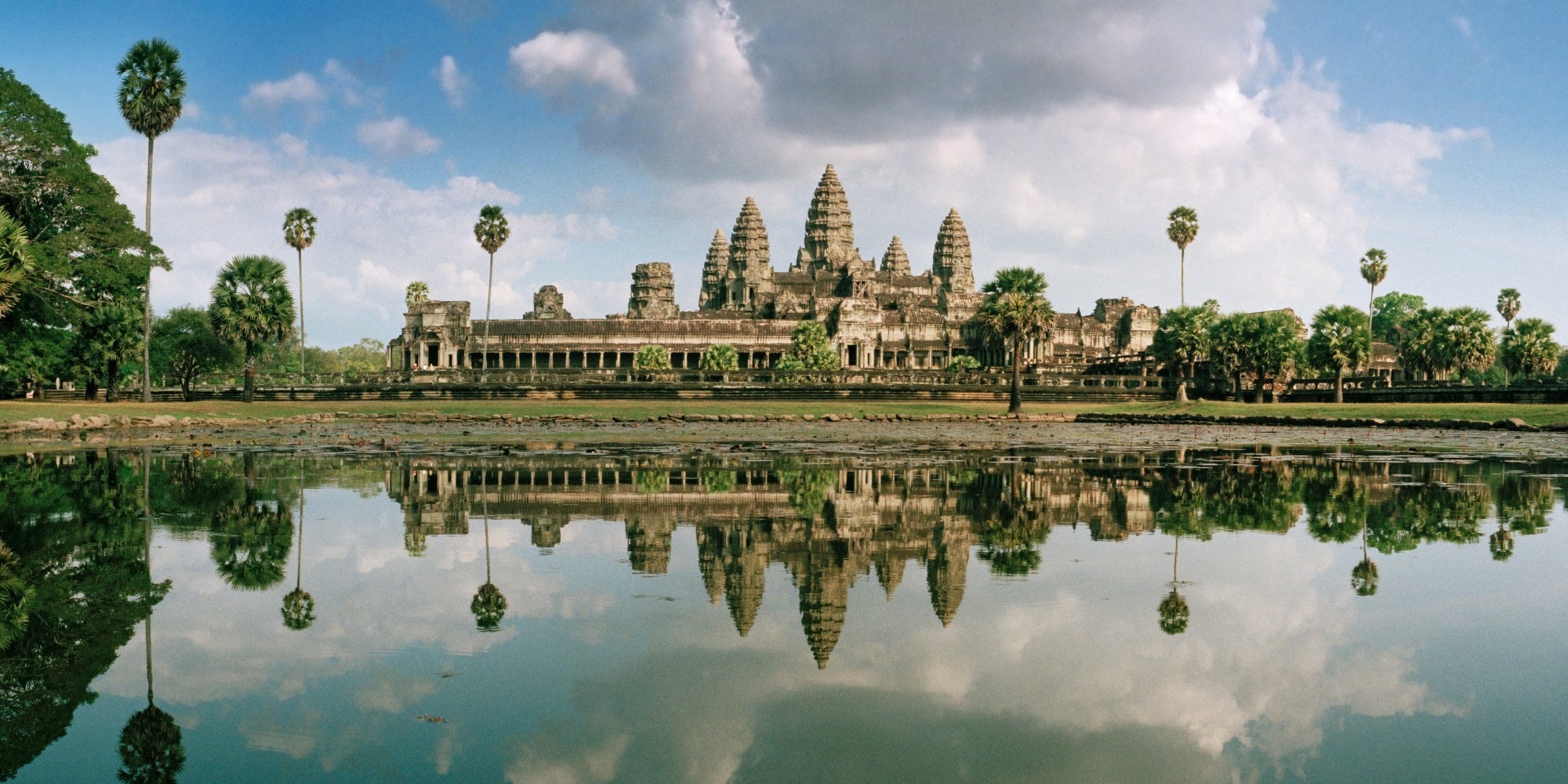
Angkor Wat temple
One of the most remarkable symbols of Hinduism in Cambodia is Angkor Wat, the largest religious monument in the world. Built in the 12th century by King Suryavarman II, the temple was originally dedicated to the Hindu god Vishnu.
Angkor Wat is famous for its grand architecture, intricate carvings, and symbolic design representing the Hindu universe. The temple’s layout reflects Mount Meru, the sacred mountain believed in Hindu mythology to be the center of the universe. Its walls are decorated with detailed bas-reliefs depicting scenes from Hindu epics such as the Ramayana and Mahabharata.
Although Angkor Wat later became a Buddhist temple, its Hindu origins remain visible in its structure, carvings, and spiritual symbolism. Today, it stands as a UNESCO World Heritage Site and one of the most important historical landmarks in the world.
Major Hindu Deities Worshipped in Cambodia
Hinduism in Cambodia focused mainly on three principal deities: Shiva, Vishnu, and Brahma. Among them, Shiva was the most widely worshipped god during the Khmer Empire. Many temples were dedicated to Shiva, and sacred symbols such as the Lingam represented divine power and creation.
Vishnu was also highly respected, particularly during the reign of King Suryavarman II. Temples dedicated to Vishnu often displayed scenes from the Ramayana, including the story of Prince Rama and his battle against the demon king Ravana.
Brahma, the creator god, was worshipped as part of the Hindu trinity, although temples dedicated solely to Brahma were less common. Together, these deities formed the spiritual foundation of Cambodian Hinduism.
Hindu Epics and Their Influence on Cambodian Culture
The great Hindu epics, the Ramayana and Mahabharata, have had a lasting influence on Cambodian literature, dance, and theater. The Cambodian version of the Ramayana is known as Reamker, which tells the story of Prince Rama in a style unique to Khmer culture.
Traditional Cambodian dance dramas often portray scenes from the Reamker, using elaborate costumes, gestures, and music. These performances are still popular today and are considered an important part of Cambodia’s cultural heritage.
Hindu Architecture and Temple Design in Cambodia
Hindu temple architecture in Cambodia reflects advanced engineering and artistic excellence. Temples were built using sandstone and laterite, with detailed carvings covering walls, pillars, and doorways. The design of these temples followed strict religious symbolism, representing the cosmos and the journey of the soul.
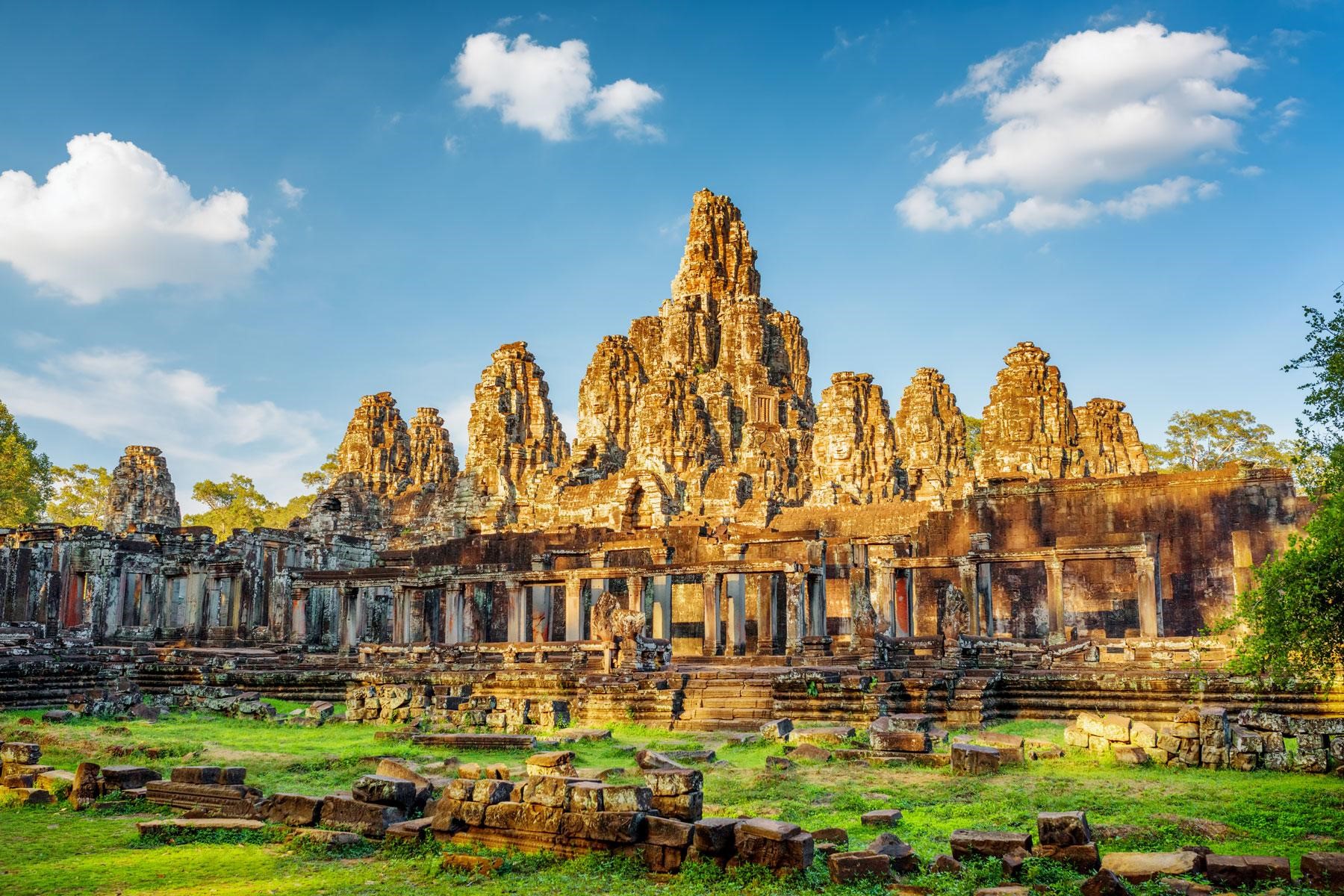
Another significant example of Hindu architecture is Angkor Thom, a large temple complex built by King Jayavarman VII. Although later associated with Buddhism, the complex still contains many Hindu elements, including statues of gods and mythological figures.
The Transition from Hinduism to Buddhism
Around the 13th and 14th centuries, Buddhism gradually replaced Hinduism as the dominant religion in Cambodia. This transition occurred peacefully, without major conflicts. Many Hindu temples were converted into Buddhist temples, and Buddhist teachings became part of daily life.
Despite this shift, Hindu traditions did not disappear. Instead, they blended with Buddhist practices, creating a unique spiritual culture that continues to exist today. Many Cambodian ceremonies, festivals, and rituals still reflect Hindu beliefs and symbolism.
Hinduism in Modern Cambodia
Today, Buddhism is the main religion in Cambodia, followed by more than 90 percent of the population. However, Hinduism continues to play an important cultural and historical role. Hindu temples remain major tourist attractions, and Hindu mythology is still taught in schools and celebrated in arts and festivals.
Indian cultural ties with Cambodia remain strong, supported by diplomatic relations, tourism, and educational exchanges. The preservation of ancient temples and historical sites has also helped maintain the legacy of Hinduism in the country.
Conclusion
Hinduism has left a deep and lasting imprint on Cambodia’s civilization, shaping its architecture, governance, literature, and cultural identity. From the rise of the Khmer Empire to the construction of magnificent temples like Angkor Wat, Hinduism played a central role in the development of one of Southeast Asia’s greatest civilizations. Even today, the influence of Hinduism continues to be visible in Cambodia’s traditions, arts, and historical monuments, serving as a powerful reminder of the enduring connection between India and Cambodia.